
Prayer as a Universal Activity: The Universal Atom of Prayer “
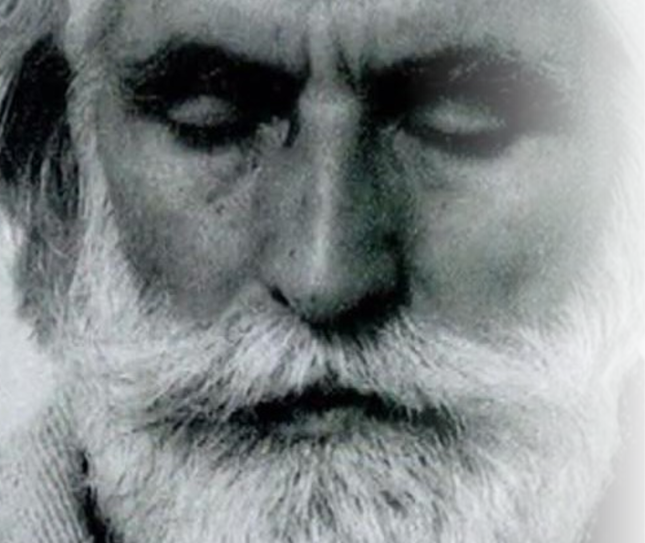
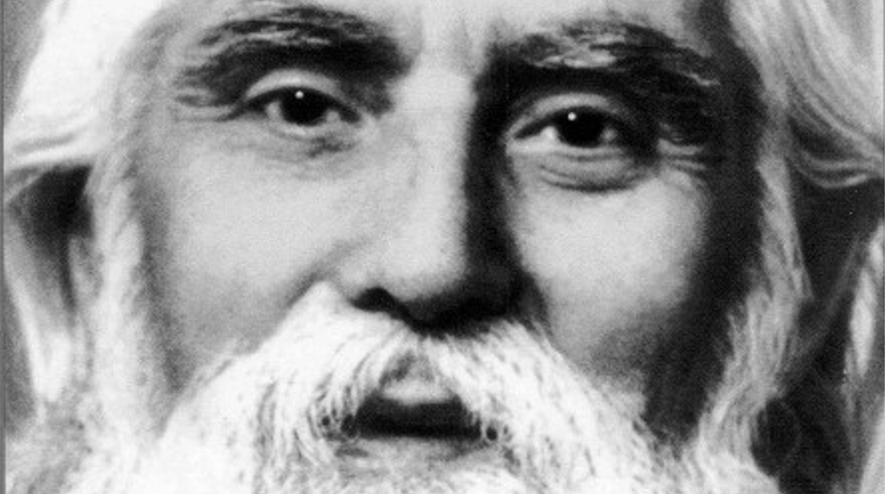
Across cultures and centuries, prayer has often been misunderstood as a religious obligation, a superstitious plea to alter fate, or an attempt to persuade an omnipotent deity to grant personal favors. In Chapter 7 of Know Thyself: Jnana Yoga (Part II) (Volume 18 of the Complete Works), Omraam Mikhaël Aïvanhov strips away centuries of dogma to reveal prayer as an exact psychic law and a fundamental necessity of the human soul.
Just as the physical body requires air, water, and nourishment to survive, the soul requires spiritual exchange with higher realms of light. In this sense, prayer is a universal human activity—one that takes place whether or not a person subscribes to a formal religion.
Why Every Human Being Possesses the Capacity to Pray
Aïvanhov observes that human beings are born with vastly unequal material and intellectual endowments. One person inherits wealth, another poverty; one possesses a brilliant intellect or robust physical health, while another struggles with limitations. Yet, in the spiritual realm, the Creator has maintained absolute justice by placing one identical, indestructible faculty inside every human soul: the atom of prayer.
According to Aïvanhov, even if a human being were ground to dust, this single particle would remain intact. It is the ultimate lifeline connecting the created being to its Source. Because of this atom of prayer, no individual is ever truly helpless or abandoned. Regardless of one’s external circumstances, education, or past mistakes, anyone can activate this inner particle at any moment to re-establish contact with the Divine and begin rebuilding their inner universe from within.
Even those who consider themselves atheists or agnostics engage in a form of prayer whenever they send out an intense aspiration for truth, beauty, justice, or relief from suffering. Whenever human consciousness reaches upward toward an ideal greater than itself, the atom of prayer is set in motion.

Sending Signals of Light into the Invisible World
To explain how prayer operates across subtle dimensions, Aïvanhov compares the physical world to a vast, dark ocean in the middle of the night. Invisible to our physical eyes, this ocean is populated by luminous spirits, angels, and advanced spiritual entities who are constantly ready to assist humanity. However, cosmic law dictates that these celestial hierarchies respect human free will; they do not intrude uninvited into a person’s inner life.
Praying is the act of lighting one’s lantern or launching flares into the invisible sky. When a person prays with sincerity and intensity, their aura emits a distinct light that pierces the psychic darkness surrounding the earth. Celestial beings immediately perceive this signal, locate the soul calling for help, and descend to bring comfort, inspiration, and spiritual strength. Without this deliberate signal from below, the helpers above remain waiting at the threshold.
Individual Prayer: Inner Alchemy and Self-Transformation
While prayer is universal in nature, its mastery begins within the individual. Aïvanhov emphasizes that individual prayer is not about informing God of our problems—an omniscient Creator already knows what we need. Rather, individual prayer is a process of inner alchemy designed to elevate our own vibratory frequency.
The Meaning of “Praying in Secret”
To illustrate the mechanics of effective personal prayer, Aïvanhov turns to the well-known Gospel instruction: “When you pray, go into your room, shut your door, and pray to your Father who is in secret.”
In initiatic language, this “room” is not a physical bedroom, nor is the door made of wood. The room represents the higher, superconscious plane within each human being, and the door represents our faculty of attention and willpower. To “shut the door” means to close off the clamor of the lower nature—our daily anxieties, grievances, sensory distractions, and ego-driven desires—so that our consciousness can ascend undisturbed into stillness and light.
Until this inner door is closed, our thoughts remain scattered across the material plane, and our prayers lack the voltage required to reach higher spiritual regions.

How Prayer Changes the Person Who Prays (Not God)
A common obstacle to sincere prayer is disillusionment: people pray for an illness to vanish, a financial crisis to resolve, or a war to end, and when external reality does not immediately shift, they conclude that prayer does not work.
Aïvanhov clarifies that human beings remain subject to physical laws and collective karma; therefore, prayer does not arbitrarily suspend the laws of nature. Its true arena of action is internal. When you project your thought toward the Divine, you elevate your consciousness to rarefied spiritual heights where you capture pure, subtle “particles” or “electrons” of light.
When you return from prayer, these luminous elements circulate through your subtle bodies, pacifying turbulent emotions, clarifying confused thoughts, and strengthening your nervous system. Prayer may not immediately remove the storm outside, but it transforms the inner state of the person facing the storm—endowing them with the peace, lucidity, and resilience needed to triumph over any ordeal.
From Self-Interest to Self-Surrender
Most human prayers are transactional: “Lord, give me health, protect my family, grant me success.” While Aïvanhov acknowledges that calling for help in times of distress is natural and valid, he invites spiritual seekers to evolve toward a far higher form of individual prayer: consecration and self-surrender.
In this highest state, the seeker ceases to dictate to heaven what should happen. Instead, they offer their lower nature—the personality, with all its weaknesses and limitations—as a living vessel, asking luminous entities to take possession of their thoughts, feelings, and actions so that the Divine may manifest through them for the good of all creation.